
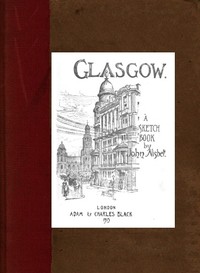
Glasgow: A Sketch Book by John Nisbet
I picked up John Nisbet's 'Glasgow: A Sketch Book' expecting a simple collection of drawings. What I got was a quiet, personal tour led by a man who clearly loved his city's bones—its old stones and hidden corners.
The Story
There isn't a plot in the traditional sense. Think of it as a series of walks. Nisbet, an architect, takes his notebook and pencil across Glasgow from the 1890s into the early 20th century. He stops to draw a weathered tenement doorway in the Saltmarket, the Gothic spire of the University, a bustling dockside scene at the Broomielaw. Alongside each sketch, he jots down notes. He might tell you when a building was constructed, point out a unique architectural feature, or simply share a memory of what the street sounded like on a rainy afternoon. The 'story' is the city itself, caught in a moment of massive change, documented by someone who paid attention.
Why You Should Read It
This book feels honest. Nisbet isn't trying to sell you on Glasgow's grandeur or its industrial might. He's showing you its texture. His sketches are quick, sometimes rough, but full of life. You can see where he paused to get the lines of a roof just right. His writing is straightforward, like a friend pointing something out. Reading it, you get a double vision: you see the Glasgow he saw, and you can't help but think about what stands there today. It makes you want to go out and look more closely at your own city. The power is in its simplicity. It’s a record of things that were often overlooked, made by a man who knew they wouldn't last forever.
Final Verdict
This is a gem for a specific reader. It's perfect for Glaswegians who want to connect with their city's past in a very tangible way. History and architecture fans will love the primary-source feel. But I'd also recommend it to anyone who enjoys urban walking, journaling, or slow travel. It's less of a page-turner and more of a companion for a thoughtful afternoon. If you need a fast-paced narrative, look elsewhere. But if you like the idea of time travel through the eyes of a keen observer, Nisbet's sketchbook is a quiet, rewarding journey.
This work has been identified as being free of known copyright restrictions. Thank you for supporting open literature.
Thomas Jones
1 year agoImpressive quality for a digital edition.
Robert Jackson
1 year agoAs someone working in this industry, I found the insights very accurate.
Nancy Lee
9 months agoAfter finishing this book, the storytelling feels authentic and emotionally grounded. Exactly what I needed.
Melissa Davis
1 year agoVery interesting perspective.
Karen Johnson
3 months agoAs a professional in this niche, the breakdown of complex theories into digestible segments is masterfully done. I am looking forward to the author's next publication.