
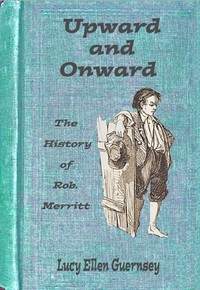
Upward and onward : or, The history of Rob. Merritt by Lucy Ellen Guernsey
Let's be honest, picking up a book from 1868 with a title like 'Upward and Onward' sounds like homework. I expected a simple, preachy tale about a good boy making good choices. What I found was a surprisingly nuanced portrait of a young man at a crossroads.
The Story
We meet Rob Merritt as a teenager. His father, a respected and prosperous merchant, has mapped out Rob's future: join the family business, learn the trade, and secure a comfortable life. It's a sensible plan, and Rob loves and respects his father. But Rob has a secret passion. He's fascinated by mechanics, bridges, and construction. He doesn't just want to sell things; he wants to build them. The story follows Rob as he wrestles with this conflict. He tries to please his father by working in the counting-house, but his heart isn't in it. He seizes small chances to study and sketch engineering principles, all while fearing his father will see it as a rejection of everything he's provided. The central question isn't whether Rob will succeed, but whether he'll have the courage to honestly confront his own desires and his family's expectations.
Why You Should Read It
What struck me most was how modern Rob's dilemma feels. This isn't a story about a rebellious youth; it's about a thoughtful kid trying to honor his family while being true to himself. Lucy Ellen Guernsey writes Rob with real empathy. You feel his anxiety, his moments of hope, and the weight of his father's disappointment. The father isn't a villain, either. He's a man who believes he's offering the best possible life, which makes the conflict more authentic and painful. The book is a slow, character-driven look at vocational calling, parental pressure, and the quiet bravery it takes to step onto an unproven path.
Final Verdict
This is a perfect pick for readers who enjoy classic coming-of-age stories or historical fiction that focuses on everyday emotional truths. If you liked the family dynamics in Little Women or the personal struggles in a George Eliot novel, but want something with a shorter page count, give this a try. It's also a great find for anyone interested in 19th-century American social history, as it subtly explores changing ideas about work and ambition. Don't expect wild adventures; instead, get ready for a thoughtful, heartfelt journey about finding your place in the world.
This title is part of the public domain archive. You do not need permission to reproduce this work.
William Lee
6 months agoI decided to give this a try based on a colleague's recommendation, the emphasis on ethics and sustainability within the topic is commendable. I am looking forward to the author's next publication.
Charles Davis
2 years agoFinally found a version that is easy on the eyes.







Elizabeth Thompson
2 years agoComparing this to other titles in the same genre, the inclusion of diverse viewpoints strengthens the overall narrative. Well worth the time invested in reading it.