
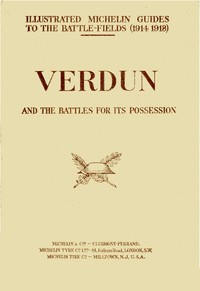
The Battle of Verdun (1914-1918) by Pneu Michelin (Firm)
Let's get the oddest part out of the way first: the author. This book wasn't written by a historian named 'Unknown.' It was produced by the Pneu Michelin firm—the tire company. In 1919, with the trenches still fresh, they published this as a guidebook for travelers, veterans, and pilgrims wanting to visit the Verdun battlefield.
The Story
There's no traditional narrative with characters. Instead, the 'plot' is the landscape itself. The book is structured like a tour. It provides detailed maps, before-and-after photographs of shattered towns, and precise driving directions (for your car with Michelin tires, naturally) to key sites: Fort Douaumont, the destroyed village of Fleury, the infamous 'Trench of Bayonets.' It explains what happened at each location during the 300-day meat grinder of 1916. The 'story' it tells is one of total destruction, documented with a shocking matter-of-factness. You're not reading about the battle; you're being given a map to walk through its aftermath.
Why You Should Read It
The power here is in the jarring disconnect between the form and the content. A cheerful, practical guidebook format collides with images of utter ruin. This isn't a distant, polished history. It's primary source material that captures how people immediately tried to make sense of the catastrophe. The corporate motive (selling tires and guides) feels strangely honest next to later, more 'noble' histories. It makes the war feel recent, visceral, and oddly mundane in its horror—just another stop on a road trip. It forces you to see the battlefield not as a abstract strategic concept, but as a real, scarred place you could theoretically visit.
Final Verdict
This isn't for someone looking for a straightforward history of WWI. It's a must-read for anyone interested in how we remember war, in unconventional historical sources, or in the sheer weirdness of the post-WWI period. It's perfect for history buffs who think they've seen it all, travelers with a dark curiosity, and anyone who appreciates a document that makes you stop and say, 'Wait, they did WHAT?' A haunting, one-of-a-kind piece of publishing history.
There are no legal restrictions on this material. Thank you for supporting open literature.
Thomas Thompson
8 months agoHaving followed this topic for years, I can say that the structural organization allows for quick referencing of key points. It cleared up a lot of the confusion I had previously.
Thomas Scott
1 year agoBeautifully written.
Ashley Hill
2 years agoThis is one of those stories where the depth of research presented here is truly commendable. Worth every second.





John Martinez
3 months agoI've been looking for a reliable source on this topic, and the level of detail in the second half of the book is truly impressive. It definitely lives up to the reputation of the publisher.