
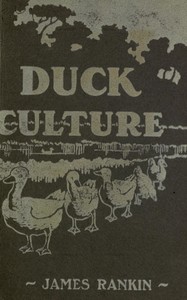
Natural and Artificial Duck Culture by James Rankin
Let's be clear from the start: this is not a novel. Published in 1889, James Rankin's book is exactly what the title promises—a thorough manual on duck husbandry. But within its practical pages lies a fascinating snapshot of agricultural thought in the late Victorian era.
The Story
The 'story' here is the argument Rankin builds. He systematically walks the reader through every aspect of duck life: selecting breeds, constructing ponds and houses, managing feeding, and, most importantly, the art of incubation. The core narrative thread is his championing of 'artificial' culture—using incubators and brooders—over leaving ducks to their own devices. He presents case studies, calculates egg yields, and details his methods with the zeal of a scientist presenting a breakthrough. The book's momentum comes from following his logic as he tries to prove that human intervention can outdo nature when it comes to producing plump ducks and plentiful eggs.
Why You Should Read It
You should read it for the voice. Rankin isn't a detached observer; he's a true believer. His passion for efficient, clean, and profitable duck farming leaps off the page. You can feel his frustration with 'old-fashioned' methods and his pride in his successes. Reading this book today is like finding a time capsule. It's a reminder of how deeply connected daily life was to agriculture, and how much effort went into solving what we now consider simple problems. The specifics about duck care are interesting, but the real reward is seeing the world through Rankin's eyes—a world where improving a duck's livelihood was a meaningful way to improve your own.
Final Verdict
This book is a niche delight, but its appeal is broader than you might think. It's perfect for history buffs who enjoy primary sources that aren't about wars or politics, but about everyday life. It's great for homesteaders or animal lovers curious about historical practices. Most of all, it's for any reader who loves uncovering odd, forgotten books full of personality. You won't get a thrilling plot, but you will get a compelling, authentic, and oddly human look at a vanished world, one duck egg at a time.
This title is part of the public domain archive. Feel free to use it for personal or commercial purposes.
Donna Brown
1 year agoEssential reading for students of this field.
Joseph Gonzalez
1 year agoI have to admit, the flow of the text seems very fluid. This story will stay with me.

Daniel Moore
1 year agoLoved it.