
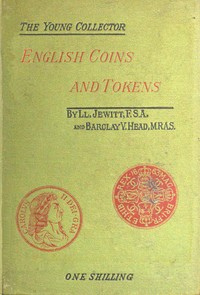
English Coins and Tokens, with a Chapter on Greek and Roman Coins by Jewitt et al.
Let's be clear from the start: this isn't a novel. There's no single plot with a beginning, middle, and end. Instead, think of it as an expertly guided tour through a vast, hidden museum you walk past every day. The 'story' is the story of Britain itself, told through the metal in its people's pockets.
The Story
The book is structured as a comprehensive guide. It begins by laying the groundwork with Greek and Roman coins, showing you the ancient roots of the systems that would follow. Then, it marches chronologically through English history. You meet the Anglo-Saxon kings, the Normans, the Plantagenets, all the way up to the then-modern Victorian era. For each period, the authors break down the coins: what they were made of, how they were designed, and why they changed. You see how Henry VIII's desperate need for cash led to 'debased' coins that were practically worthless. You learn about the fascinating world of 'tokens'—unofficial coins issued by shops and towns when the Royal Mint couldn't keep up. It's a story of power, economics, art, and everyday life.
Why You Should Read It
What I love most is how it changes your perspective. Head and his co-authors write with a quiet passion that's contagious. They don't just describe a coin; they explain the why behind it. Why did Elizabeth I introduce milled edges? To stop people shaving silver off the sides! Suddenly, a technical detail becomes a tale of crime and prevention. The chapter on tokens is a particular highlight, revealing a whole underground economy run by merchants. It makes history feel tangible and clever.
Final Verdict
This is a classic for a reason. It's perfect for history buffs who want to go beyond kings and battles, for collectors who crave context for their finds, or for any curious reader who enjoys 'how things work' deep dives. It's not a breezy beach read—you'll want to take it slow—but it rewards your attention richly. If you've ever held an old coin and wondered about its journey, this book is your invitation to find out.
This work has been identified as being free of known copyright restrictions. Use this text in your own projects freely.
Ashley Lopez
9 months agoI found the author's tone to be very professional yet accessible, the emphasis on ethics and sustainability within the topic is commendable. A solid investment for anyone's personal development.
Barbara Thompson
1 year agoThis is an essential addition to any academic digital library.
Dorothy Ramirez
1 year agoSolid story.
Michael Martinez
1 year agoComprehensive and well-researched.







Ashley Moore
1 year agoThis digital copy caught my eye due to its reputation, the nuanced approach to the central theme was better than I expected. I feel much more confident in my knowledge after finishing this.